


From necessity to infrastructure: how recycling shaped America
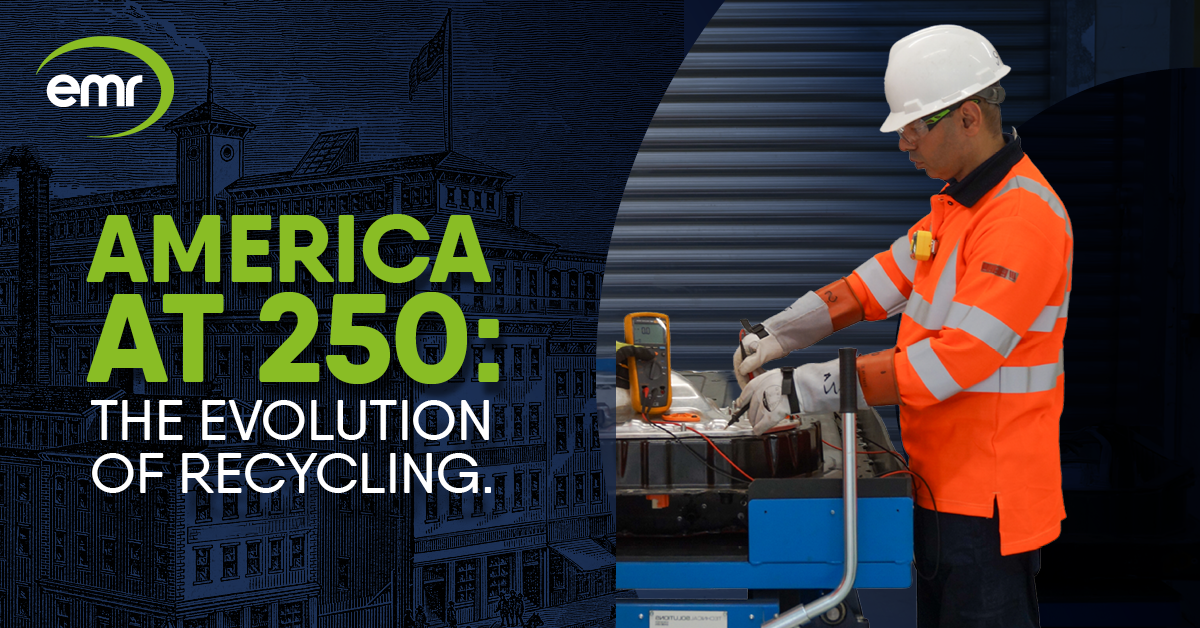
Recycling may feel like a modern habit, but its roots run far deeper than blue bins and curbside collections.
Long before formal recycling systems existed, people across the United States were already finding ways to reuse materials, recover value and make the most of what they had.
What began as necessity became industry. Then infrastructure. Today, it’s a vital part of how we protect resources, support manufacturing, and keep materials in circulation.
Before recycling systems, there was resourcefulness
In the late 1700s, there were no formal waste systems, no municipal collection services and certainly no modern recycling facilities like EMR.
Households managed their own waste, and materials were rarely thrown away without thought.
Items were repaired, repurposed and reused for as long as possible. Clothing became rags, Containers were reused. Metals were melted down and recast. People understood the value of materials because replacing them was expensive and often difficult.
During the American Revolution, that resourcefulness became critical. Faced with shortages and restrictioned manufacturing, colonists reused metals to support the war effort, melting down materials to produce ammunition and supplies.
Long before recycling became policy, it was practical survival.
The 1800s: repair, reuse, repeat
Throughout the 1800s, reuse remained part of everyday life. Household guides often included instructions for repairing tools, repurposing textiles and extending the life of common goods.
Waste, as we think of it today, was minimal because most materials were used until they had no purpose left to serve.
Later in the century, cities began introducing organized waste collection systems. Inspired by early programs in the United Kingdom, communities across the United States started developing more formal approaches to managing waste and recovering usable materials.
By the late 1890s, the foundation of modern recycling had started to take shape.
The rise of the recycling industry
The 1890s also marked the beginning of commercial recycling operations in the United States.
Entrepreneurs like William Reisner and the Louis Levin Company helped pioneer the trade of recovered materials. In 1897, New York City established one of the first organized material recovery operations, where waste was sorted in “picking yards” into categories such as metal, paper and other reusable goods.
By the early 1900s, cities began separating reusable materials from general waste. Recycling, particularly metals, became more than household habit. It became an economic driver as industries recognized the value of reintroducing materials into production.
Recycling through hardship and war
During the Great Depression, recycling remained important because of the value they carried. Recovering and selling scrap metal provided income for many families during difficult economic times.
This importance intensified during World War II.
National “salvage” campaigns encouraged citizens to collect recyclable materials to support military manufacturing. Over 400,000 volunteers gathered steel, rubber, paper and other reusable materials needed for wartime production.
Recycling was no longer just practical; but a national effort and shared responsibility.
The modern recycling movement
Modern public recycling programs began emerging in the 1960s as environmental awareness increased and concerns around waste grew.
Communities introduced curbside recycling programs for materials like paper, cans and metal. In the early 1970s, the universal recycling symbol became a recognized sign of a growing commitment to sustainability and resource conservation.
Legislation soon followed.
In 1971, Oregon became the first state to introduce a bottle deposit law, encouraging people to return containers for reuse while earning money back in the process. Similar programs expanded across the country in the decades that followed. By the 1980s, recycling had become more standardized. Towns like Woodbury, NJ set national examples, and in 1987, New Jersey became the first state to mandate recycling statewide that helped increase participation and reduce landfill waste.
Technology changes recycling
The late 20th century brought major changes to how recycling worked.
Single-stream recycling made participation easier for households by allowing materials to be collected together before sorting. Recycling rates steadily increased throughout the 1990s (16%) and early 2000s (29%) as programs expanded and public awareness grew.
New challenges also emerged.
As technology evolved, electronic waste (e-waste) became one of the fastest growing waste streams in the country. Computers, mobile phones and other electronics required new recycling processes and regulations to safely recover valuable materials and manage hazardous components.
Recycling today
Today, recycling combines practical resource recovery with advanced technology.
Recovered metals and materials continue to support manufacturing, infrastructure and production across the country. Materials that once may have been discarded are now recognized as part of a circular supply chain that keeps resources in use for longer.
At EMR, we process large volumes of metals every year, helping turn today’s materials into tomorrow’s products.
What started as a necessity has evolved into something much bigger. A system that supports industry, conserves resources and reduces waste. But the principle remains the same as it was generations ago: there is still value in what others throw away.